
Insights
Institutional Investor Indicators: July 2025

Institutional investors have not been as broadly optimistic as they are today since the announcement of a COVID-19 vaccine. It suggests they are becoming immune to policy uncertainty or at least believe such uncertainties have peaked.
August 2025
Our monthly video series offers an updated analysis of our institutional investor indicators.
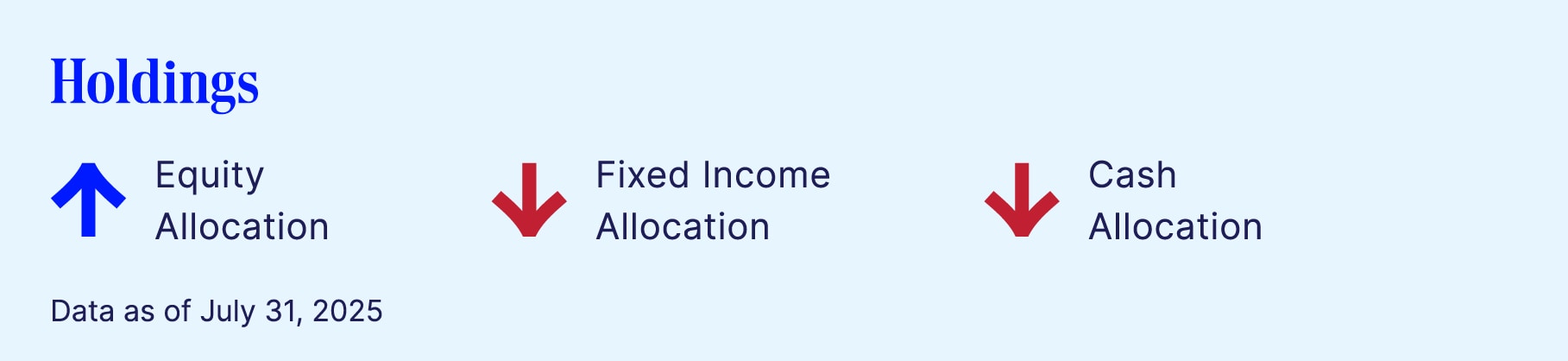
- Our Institutional Investor Holdings Indicator shows the aggregate holdings of institutional investors across three asset classes: stocks, bonds and cash. This simple information can tell us a lot about how investors view the economy and markets.
- Our Institutional Investor Risk Appetite Indicator is based on flows — buying and selling activity — rather than portfolio positions. It reveals whether investors, in aggregate, are buying risk or selling it. While the Holdings Indicator tells us about the current location, the Risk Appetite Indicator tells us about the direction of travel.
View July 2025 commentary by Michael Metcalfe, head of Macro Research for State Street Markets.
Institutional investors immunity
Despite numerous potential pitfalls for financial markets in the third quarter, institutional investors remain optimistic. Their aggressive buying of risky assets mirrors the fervor seen in November 2020, when vaccines for COVID-19 were announced. This suggests that investors believe the peak of uncertainty, whether geopolitical or policy-related, has passed. However, the stark contrast between investor confidence and the ongoing decline in business confidence, especially in the United States, is concerning.
Over optimism?
Our data shows that equity allocations are near their highest levels in 25 years. The only times they were higher were during the dot-com bubble and the global financial crisis (GFC), serving as a caution that today's buoyant sentiment could be vulnerable to shocks. Beneath this overall optimism, there are intriguing nuances. Investors continue to favor US consumer discretionary stocks, hinting at potential disruptions to their growth outlook.
Global growth rebalancing
Robust cross-border flows in July were concentrated in Japan, China and Brazil, indicating a shift toward global growth rebalancing. In contrast, weak demand for Indian equities reflects lingering tariff and policy uncertainties. Fiscal concerns persist, with foreign demand for Treasuries, Gilts and OATs remaining weak. Notably, after five months of persistent hedging, sentiment towards the US dollar stabilized in July, suggesting that investors believe policy uncertainties have peaked for now.


