Insights
Institutional Investor Indicators: May 2026

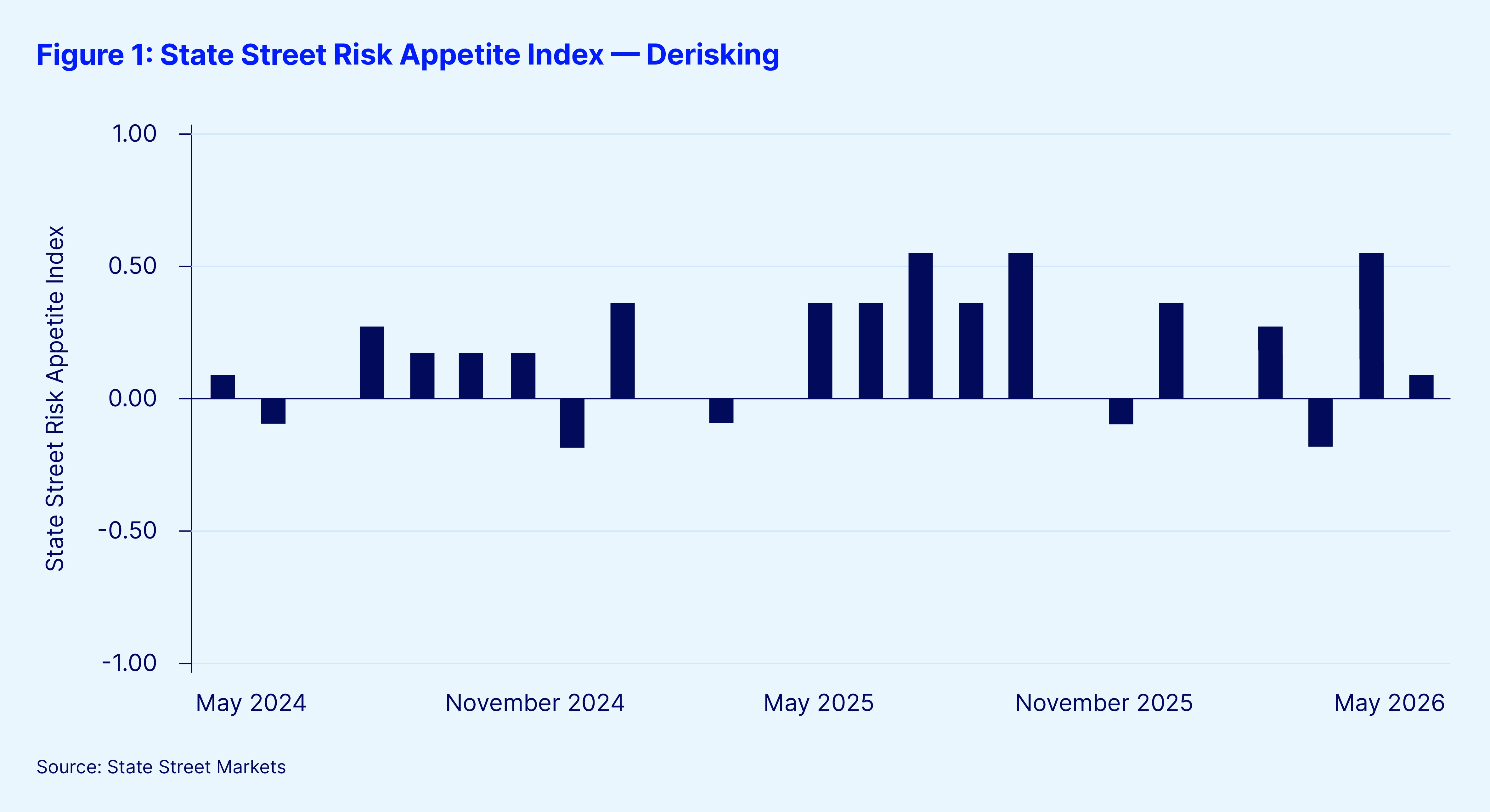
The Risk Appetite Index remained positive in May but eased from April highs, with sentiment softening across most assets except foreign exchange (FX), while positioning suggests continued risk confidence.
June 2026
Our monthly series offers an updated analysis of our institutional investor indicators.
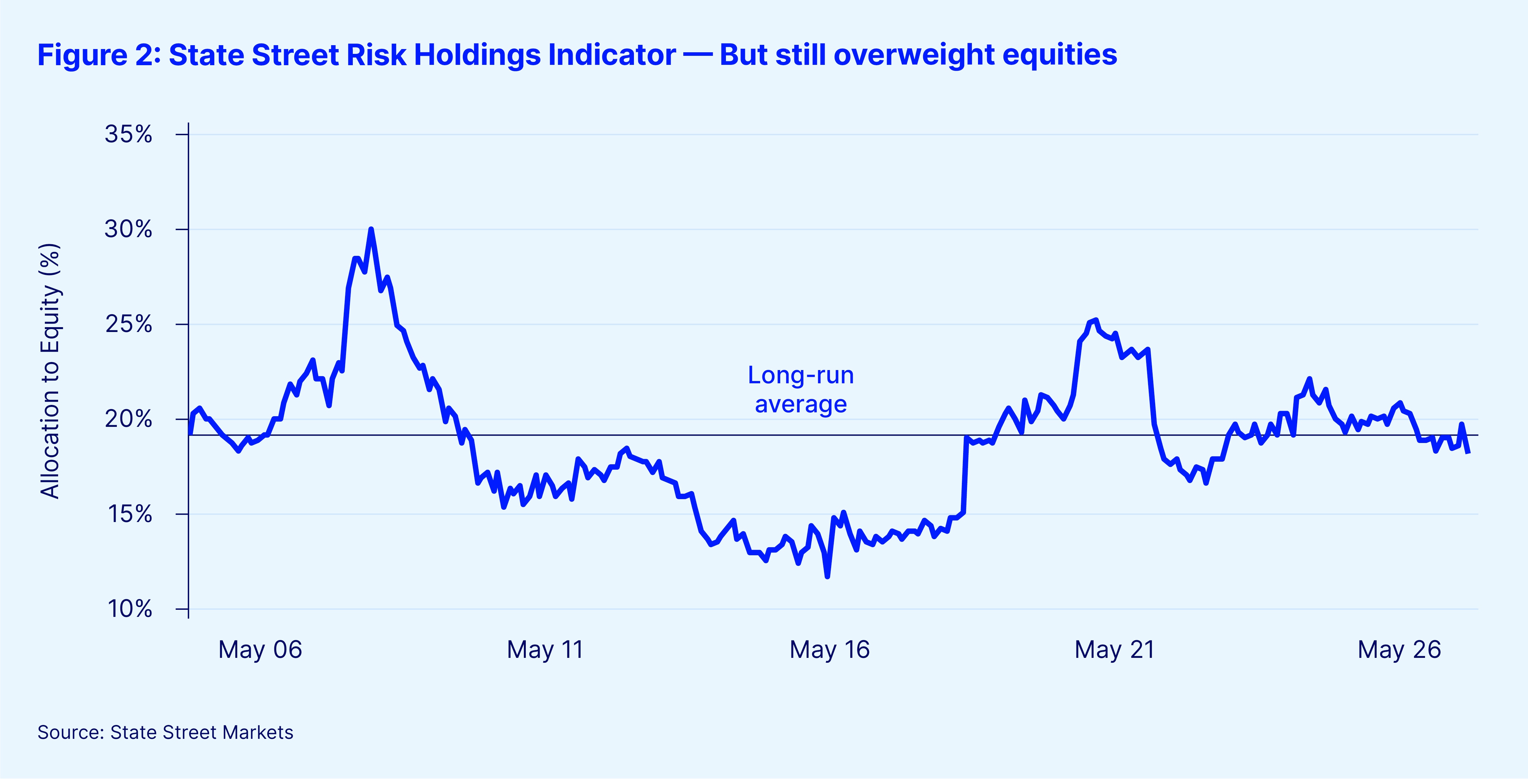
- Our Institutional Investor Holdings Indicator shows the aggregate holdings of institutional investors across three asset classes: stocks, bonds, and cash. This simple information can tell us a lot about how investors view the economy and markets.
- Our Institutional Investor Risk Appetite Indicator is based on flows — buying and selling activity — rather than portfolio positions. It reveals whether investors, in aggregate, are buying risk or selling it. While the Holdings Indicator tells us about the current location, the Risk Appetite Indicator tells us about the direction of travel.
The State Street Risk Appetite Index remained in positive territory for May but eased noticeably from April’s elevated levels. Sentiment moderated across nearly all asset classes, with FX the main exception, remaining broadly steady. Even so, extreme holdings remain elevated, suggesting investors still have confidence in the outlook for risk assets despite sentiment moving closer to neutral.
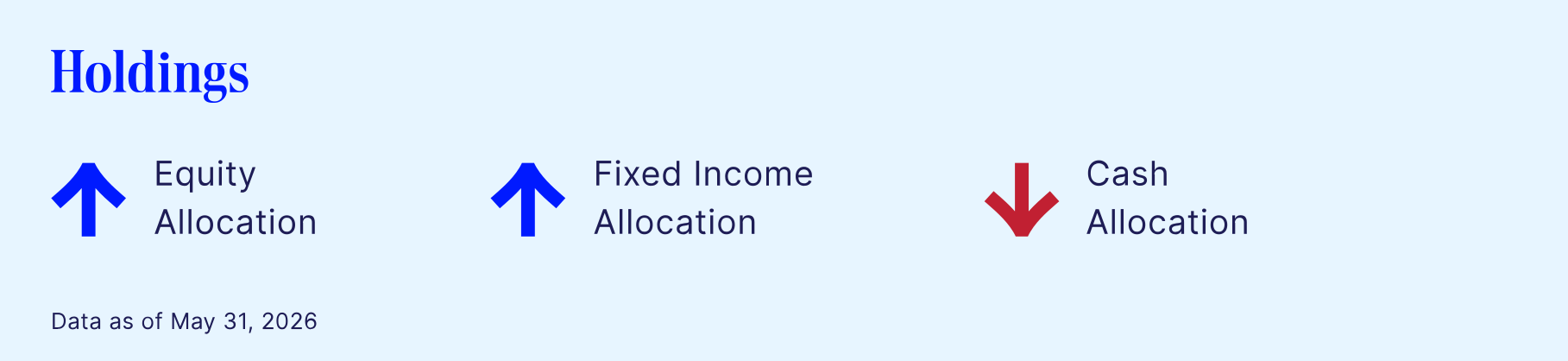
Over the past month, equity allocations increased by 1 percentage point, funded from cash, while fixed income allocations (excluding Treasury bills) were essentially unchanged. Overall, this suggests that institutional investor positioning was broadly stable, with only limited reallocation across the major asset classes.
Read the commentary by Noel Dixon, Senior Macro Strategist, State Street Markets.
Asset managers ended May at their highest equity allocation since 2000. Equity exposure increased by 1 percentage point during the month, funded from cash, while fixed income allocations were broadly unchanged. Investors continued to add to United States equities, which remain their largest overweight. Within the US, allocations increased to health care, utilities, and information technology, while exposure to communication services, energy, and real estate declined.
Sentiment toward European equities remained negative, with our 20-day net flow measure in the bottom decile and investors still meaningfully underweight. Finland, Germany, and Portugal saw the largest outflows, while Spain and Belgium attracted the strongest inflows. Sector-wise, investors rotated out of consumer staples, industrials, and consumer discretionary, and increased allocations to energy, communication services, and information technology. Asian equities continued to benefit from the artificial intelligence (AI) capital spending cycle, with North Asian markets supported by stronger earnings and investor flows.
In FX, sentiment toward the US dollar remained negative. Our 20-day flow measure stayed in the bottom quartile, and investors maintaining a meaningful underweight in the dollar. Despite firmer US economic surprises, rate markets continue to price in only one Federal Reserve hike this year — modest relative to expectations for other major central banks.
Meanwhile, euro flows shifted to net selling in May after beginning the month in net buying territory. Geopolitical tensions in the Middle East has increased concern over Europe’s growth outlook and weighed on demand for European assets. Within Asia Pacific, the strongest buying was in the South Korean won, Chinese yuan/Remnibi, and Philippine peso, while the Thai baht, Indonesian rupiah, and Malaysian ringgit saw modest net selling.
Aggregate weighted flows into US sovereign fixed income strengthened, indicating renewed net buying by institutional investors. By contrast, aggregate weighted flows in German bunds remained negative throughout the month. Emerging market sovereign bond flows also stayed in net selling territory. Regionally, APAC saw continued net selling, while Latin America recorded net buying.