
Insights
Institutional Investor Indicators: March 2026

The State Street Risk Appetite Index showed investors derisked their portfolios in March, albeit with some notable nuances. Unlike recent defensive periods, they shifted back toward US equities while reducing, rather than increasing, US dollar hedges.
April 2026
Our monthly series offers an updated analysis of our institutional investor indicators.
- Our Institutional Investor Holdings Indicator shows the aggregate holdings of institutional investors across three asset classes: stocks, bonds, and cash. This simple information can tell us a lot about how investors view the economy and markets.
- Our Institutional Investor Risk Appetite Indicator is based on flows — buying and selling activity — rather than portfolio positions. It reveals whether investors, in aggregate, are buying risk or selling it. While the Holdings Indicator tells us about the current location, the Risk Appetite Indicator tells us about the direction of travel.
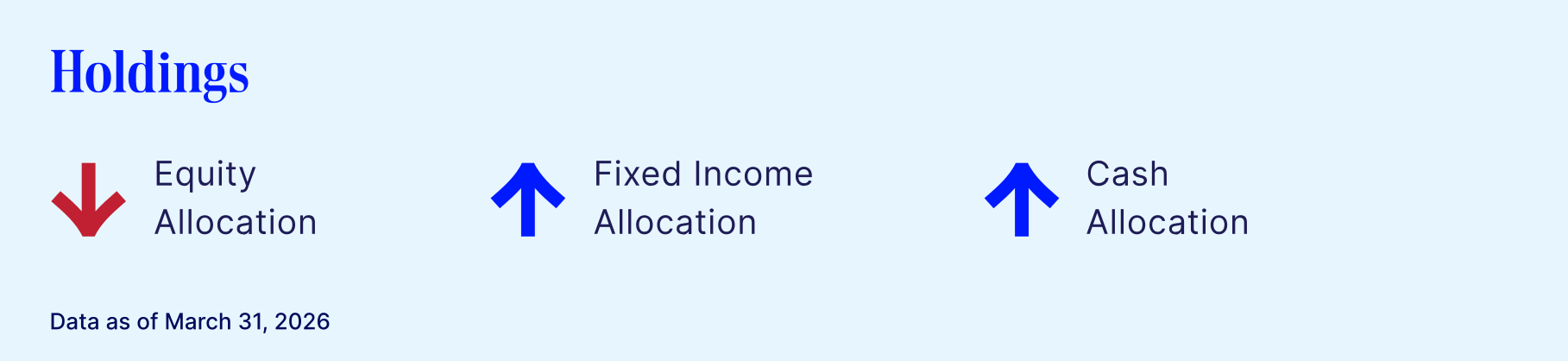
The reduction in risk exposures over the month saw aggregate allocations to equities fall by 1.6 percentage points – the sharpest monthly decline since August 2023. Despite this fall, investors still retain a significant overweight in equities. Cash allocations were the primary beneficiary of the shift away from equities, rising 1 percentage point, while allocations to fixed income rose by 0.6 percentage points.
Read the commentary by Michael Metcalfe, Head Macro Strategy, State Street Markets.
Asset managers ended February with one of their highest portfolio allocations to equities in twenty years. Against this backdrop, the outbreak of war in the Middle East triggered a substantial derisking through the month of March, both across and within asset classes. Capital flowed out of equities, predominantly into cash.
Aggregate equity allocations posted their largest decline in more than 32 months. However, this was a controlled derisking more than a panic. Across the month, the 1.6 percentage point fall in the allocation to equities was still only one third of the panic that followed the outbreak of the COVID-19 pandemic.
Within equities, funds flowed back into both United States and information technology – markets perceived to be less exposed to the energy shock, and out of European and emerging market equities, which were more exposed. This is somewhat unusual, as typically we might have expected investors to sell their biggest overweight positions in response to a shock and, in this instance, money flowed back into US equities, which remains their biggest overweight.
The response in foreign exchange (FX) markets was also somewhat different. During the last period of protracted defensive behavior this time last year, asset managers increasingly hedged their US dollar exposures, moving from an overweight to an underweight in the currency. The starting point in March 2026 was different: Asset managers began with a significant underweight in the US dollar but then bought the US dollar consistently throughout the month.
This suggests that asset managers saw the US currency as a safe haven during the market turbulence caused by the war in the Middle East – a marked contrast to the response seen during market disruptions around the Liberation Day tariffs announcements in April 2025.


